Diagnostics

In an emergency, time is EVERYTHING. Finding answers quickly can make all the difference. We use the latest advanced diagnostic tools to understand what’s happening inside your pet so we can act fast, treat confidently, and give you peace of mind during uncertain and difficult moments. Our emergency veterinary hospital has the tools, technology, and trained staff to assess your pet quickly and accurately. We are your support system in times of need, comforting you and educating you on the situation at hand.
Outside of an emergency, our diagnostic tools also play a key role in surgical planning, follow-up care, and communication with your primary care veterinarian. This way, your pet’s care is connected and continuous throughout your pet’s entire health journey, not just in isolated moments.
In-House Diagnostic Capabilities
Our emergency hospital was designed with the patient in mind, especially when it came time to plan our diagnostic capabilities. In an emergency, waiting days and traveling to another location aren’t an option. From the very beginning, our goal was to have the most advanced tools available to ensure our patients and their caregivers get the answers they need fast.
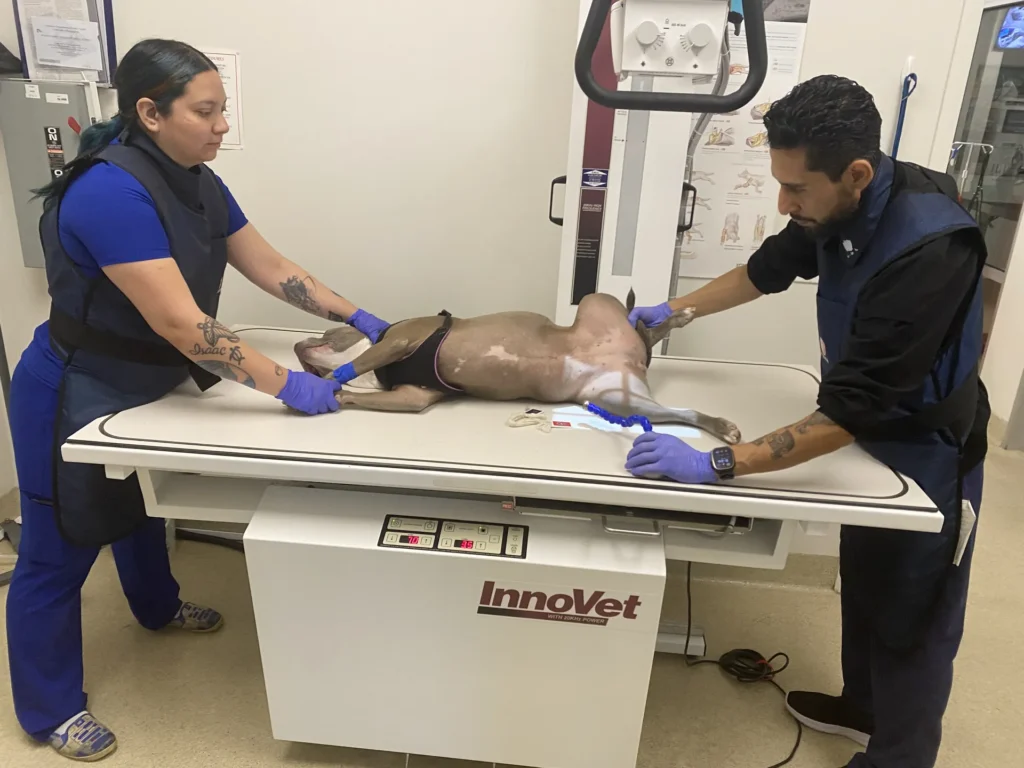
Digital Radiography (X-ray)
When your pet is injured or sick, seeing what’s happening inside their body can bring answers and relief. Digital X-rays give us clear images quickly so that we can check for broken bones, swallowed objects, or lung problems and get your pet the care they need fast.
Electrocardiogram (ECG)
If your pet’s heart is beating too fast, too slow, or unevenly, they may not show it on the outside. An ECG helps us quickly spot dangerous heart rhythms so we can treat them before they become life-threatening.
Full In-House Laboratory
Finding the answers in minutes, not days, is the solution pets need when they are faced with an emergency or urgent condition. By having a full in-house laboratory, we are able to relieve your stress and concern sooner and start working on solutions.
- Complete Blood Counts (CBC)
- Blood Chemistry Panels
- Blood Gas Monitoring
- Clotting Profiles
- Thromboelastography (TEG): Assesses risk of blood clots
- Urinalysis and Other Point-of-Care Tests
High Resolution Ultrasound
Ultrasound lets us look inside your pet’s abdominal area or chest without any pain or surgery. It helps us find problems like internal bleeding, fluid buildup, or tumors, and gives you answers without long delays or extra stress for your pet.
Oxygen Monitoring
Breathing problems can be silent but serious. Oxygen monitoring tells us how well your pet is breathing and whether they’re getting enough oxygen to their brain and body. It helps us keep them safe and stable, especially in ICU or critical care.
Telemetry (Continuous ECG Monitoring)
Some pets need extra close monitoring, especially after surgery, during seizures, or if they’re having heart trouble. Telemetry lets us monitor their heart and vital signs in real time so we can respond immediately if something changes.
CT Imaging Services
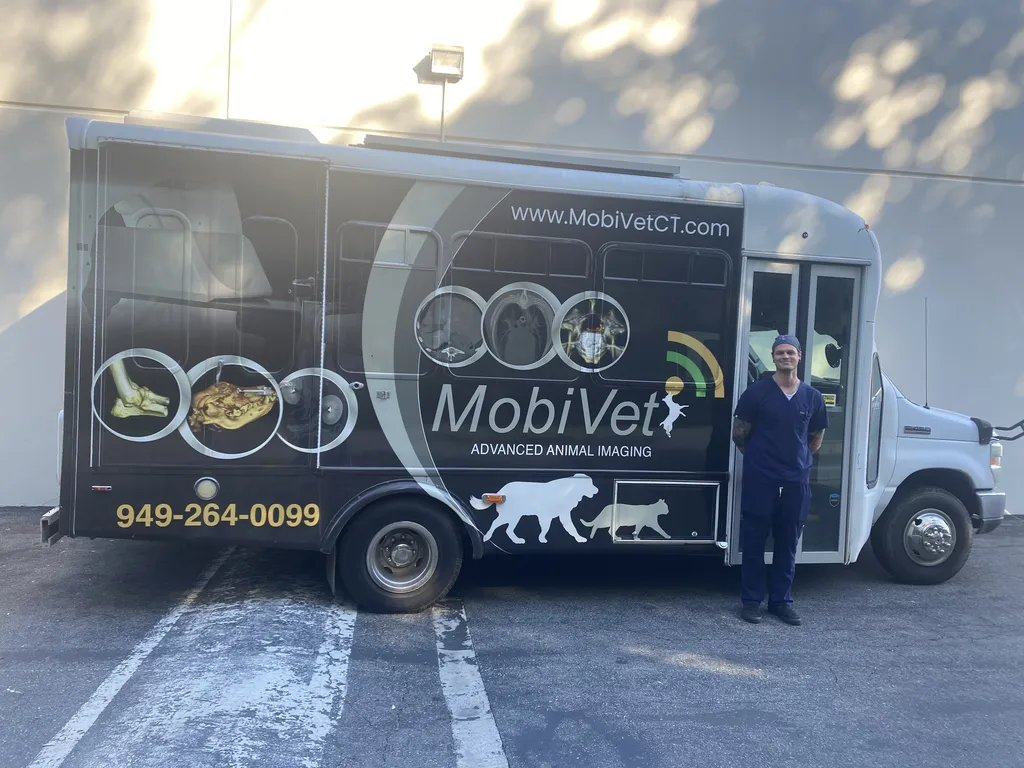
In coordination with Dr Zachery Smith, DVM Dipl ACVS, we are able to provide our clients with on-site CT imaging services. Dr. Smith and Ryan Schlax, an emergency and critical care certified veterinary technician who runs the van and assists Dr Zach Smith in surgeries, work with us to provide their services via their mobile CT imaging van outside of our emergency hospital.